


Searching for the burial insurance near me often leads to the list of agents and the companies with no clear way to tell which policy actually protects your family. The costly mistake is buying a guaranteed issue policy without understanding it’s waiting. And then assuming that your family is fully covered from day one.
Burial insurance that is also called final expense insurance or funeral insurance. It is regulated at the state level, which means that the right policy for you depends less on your ZIP Code and more on which licensed carriers and agents can legally sell the coverage in your state. This guide will explain exactly how the burial insurance works, what are the cost and how to confirm the agent or company that you find near you is legitimate before you commit to a policy.
Quick Answer
Burial insurance near me refers to the final expense insurance policies that are available through agents and carriers licensed in your state. Since every US state regulates who can sell life insurance within its borders. The coverage amount generally ranges from $5000-$25,000 for the guaranteed issue policies and it can go to $40,000 or even more for the simplified issue policies. It comes with the premiums that are based on your age, coverage amount and health class rather than your location.
Before buying make sure to confirm the agents license using the free look up tool from the national Association of insurance commissioners and always ask directly whether the policy has a graded death benefit or waiting period.
What Is Burial Insurance and How Is It Different From Other Life Insurance?
Burial insurance is a small permanent life insurance policy that is specifically designed to cover the funeral expenses, expenses and remaining debts after death. It is also marketed as final expense insurance, funeral insurance or guaranteed life insurance and all of these terms are generally described the same type of product.
The policy pays the death benefit to your named beneficiary who can use the funds for any purpose. It can include the funeral home fee, burial plot, outstanding medical bills or every living cost. Because it is permanent life insurance, most of the burial insurance policies also built modest cash value overtime. Although the primary purpose remain the same as the death benefit rather than saving growth.
Guaranteed Issue vs. Simplified Issue: Which Type of Burial Insurance Do You Need?
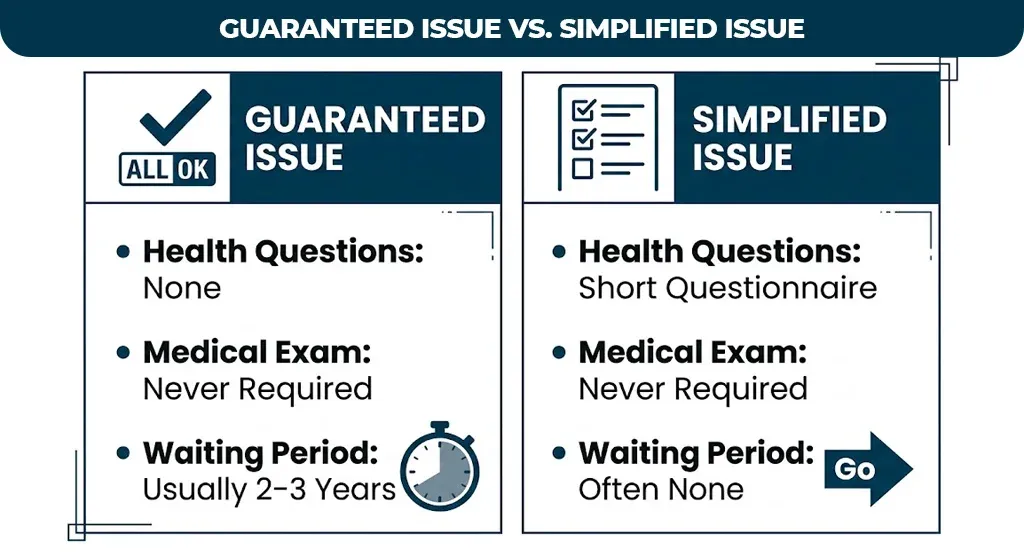
The two main types of final expense insurance for seniors are guaranteed issue and simplified issue. The difference determine whether your policy pays full benefit immediately or after a waiting period. The guaranteed issue life insurance policy except every applicant within the eligible age range with no health and no medical exam. This will make it the right choice for the applicants who have serious health conditions and cannot qualify for any other way.
The tradeoff is a graded death benefit, typically lasting two to three years, during which a death from natural causes such as illness pays out only the premiums paid plus a set percentage, rather than the full face amount. Death from an accident is generally paid in full from day one, and after the graded period ends, the policy pays the full death benefit for any cause of death.
Simplified issue policies ask a short list of health questions but skip the medical exam, and applicants who qualify based on their answers can often receive full coverage starting on day one, with no graded period. This is the closest product to true burial insurance with no waiting period, though it depends entirely on passing the health questionnaire, so it is not guaranteed for every applicant.
| Feature | Guaranteed issue | Simplified issue |
| Health questions | None | A short questionnaire |
| Medical exam | Never required | Never required |
| Typical coverage amount | $5,000 to $25,000 | $5,000 to $40,000 or more |
| Waiting period | Usually 2 to 3 years for natural death | Often none, if approved |
| Best for | Serious health conditions, seniors 65 to 85 | Applicants in reasonably good health |
| Approval speed | Nearly automatic | Same day to a few days |
How Much Does Burial Insurance Cost for Seniors?
Final expense insurance premiums are based primarily on your age, gender, health class, and the coverage amount you select, not your specific city or state. A $10,000 guaranteed issue policy purchased at age 65 will generally cost less per month than the same coverage purchased at age 80, since premiums are locked in at the age you apply and increase for older applicants.
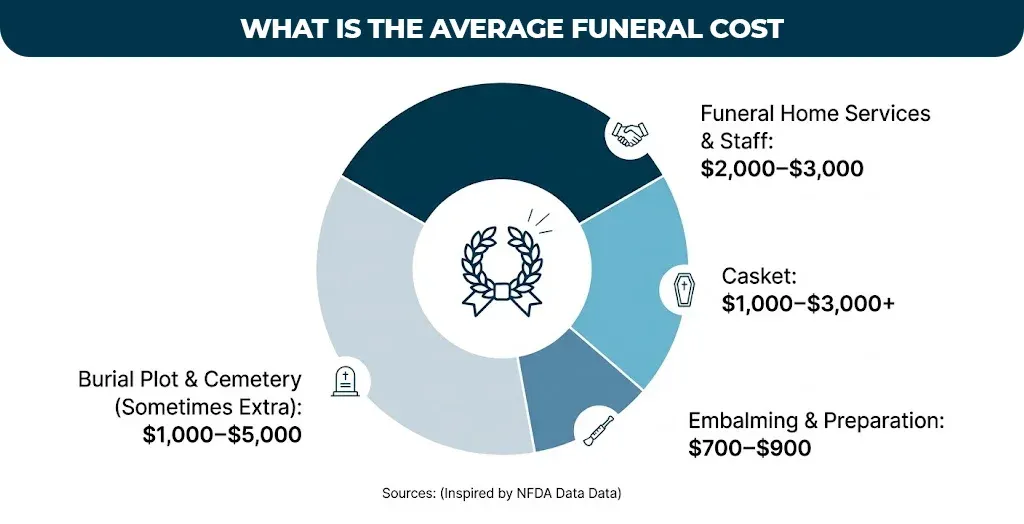
Knowing what a funeral actually cost will help you to choose an appropriate coverage amount. The national funeral directors association report that the national average cost of the funeral with viewing and burial was $8300 in 2023, while the funeral with cremation and the memorial service had an average cost of $6280. All these figures generally exclude cemetery cost such as the burial plot and grave opening fee which can add another $1000-$5000 depending on the region.
| Cost item | Typical range | Included in most burial insurance planning |
| Funeral home services and staff | $2,000 to $3,000 | Yes |
| Casket | $1,000 to $3,000 or more | Yes |
| Embalming and preparation | $700 to $900 | Yes |
| Cremation with memorial service | Median $6,280 total | Yes |
| Burial plot and grave opening/closing | $1,000 to $5,000 | Sometimes, if coverage is high enough |
| Headstone or marker | $500 to $2,500 | Sometimes |
Why “Burial Insurance Near Me” Really Means State-Licensed, Not Just Local
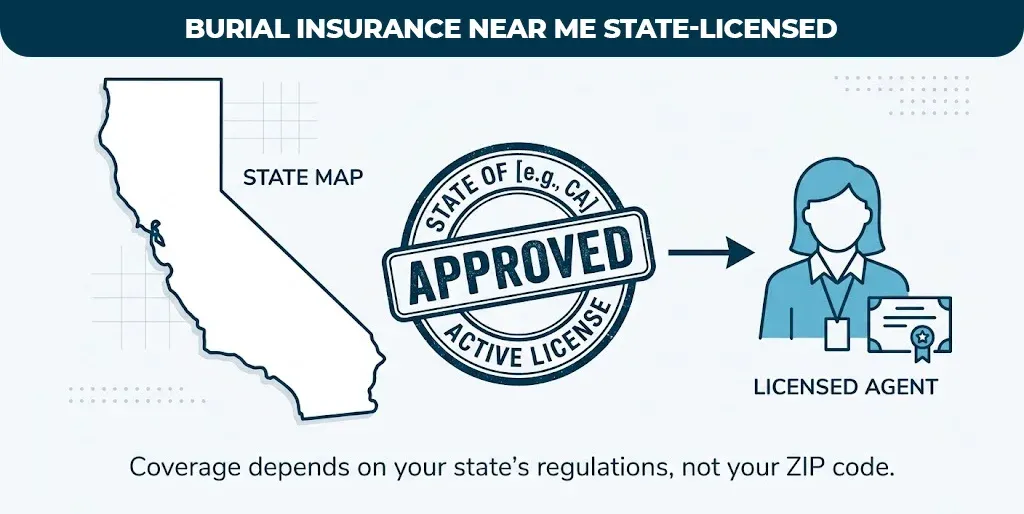
Insurance is regulated at the state level in the United States, which means every company and agent selling burial insurance must hold an active license in your specific state. This is the real answer to what a “near me” search should confirm: not proximity, but legal authority to sell you a policy where you live.
Before signing anything make sure to use the NAICs free insurance agent service to confirm that the agent license and status is legit and the specific insurance product they are authorized to sell in your state. You can also check the insurance companies financial strength rating through AM best that is an independent rating agency that even insurance companies ability to pay future claims. Since a low rating can be a warning sign regardless of how appealing the premium looks.
If an agent cannot immediately provide their license information or seems to be selling coverage without being licensed in your state, that is a clear reason to walk away, according to consumer guidance published by state insurance regulator.
Burial Insurance vs. Other Ways to Cover Final Expenses
Burial insurance is one option among several for covering end of life costs, and comparing them side by side makes the tradeoffs clearer.
| Option | How it works | Main limitation |
| Burial insurance / final expense insurance | Small whole life policy pays a death benefit to a beneficiary | Premiums continue for life; graded period on guaranteed issue |
| Personal savings | Family sets aside cash specifically for funeral costs | Requires years of saving and discipline; funds may be needed for other things |
| Prepaid funeral contract | You pay a funeral home in advance for specific services | Funds are tied to one funeral home and may not transfer if you move |
| Social Security lump-sum death payment | One-time payment to an eligible surviving spouse or child | Only $255, and only paid in limited eligibility situations |
| Medicaid-exempt irrevocable burial trust | Prepaid, irrevocable trust that does not count against Medicaid asset limits | Funds are locked in and cannot be used for anything but final expenses |
How to Choose the Right Final Expense Policy
You can start by deciding on the coverage amount that realistically matches your local funeral cost, using NFDA figures above as the base line and adding an estimate of cemetery cost if you plan to be buried rather than cremated. From there, compare the guaranteed issue and simplified issue options that are based on your current health since the simplified issue policy with the immediate full coverage is usually the better choice if you can qualify for one.
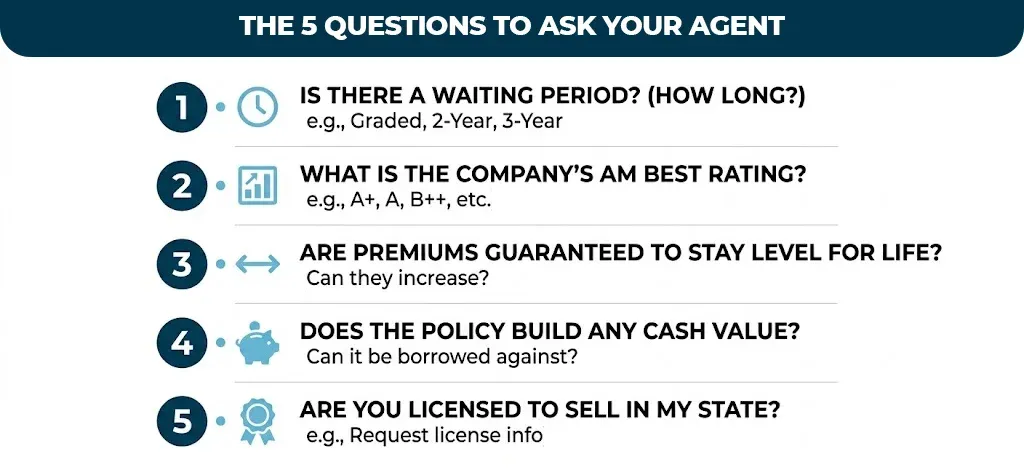
Ask every company or agent these questions directly before applying:
- Is there a graded death benefit or waiting period, and exactly how long does it last?
- What is the AM Best rating for the insurance company backing this policy?
- Are premiums guaranteed to stay level for life, or can they increase?
- Does the policy build any cash value, and can it be borrowed against later?
- Is the agent licensed to sell life insurance in my specific state?
A policy that answers all five of these clearly, in writing, is far more trustworthy than one sold primarily on urgency or a low advertised monthly premium.
Common Mistakes to Avoid When Buying Burial Insurance
The most frequent mistake is buying a guaranteed issue policy without realizing the graded death benefit exists, then assuming the family is fully covered immediately. Read the policy illustration carefully, since insurers are required to disclose the graded period, and ask the agent to point to that specific section if it is not obvious.
A second common mistake is choosing coverage based only on the lowest monthly premium rather than the actual funeral costs in your area, which can leave a family underinsured by several thousand dollars.
A third mistake is assuming that final expense insurance rules and pricing are identical everywhere. Because life insurance is regulated at the state level, the same carrier may offer different coverage amounts.
Finally, buying from an unlicensed or unverified agent, even if the price looks attractive, removes the consumer protections that come from a properly regulated policy and puts the payout itself at risk.
Finding Coverage That Actually Fits Your Situation
If you want help comparing options without pressure, Insure Final Expense can walk you through guaranteed issue and simplified issue policies available in your state and explain the waiting period on any policy in plain language before you decide anything. There is no obligation to purchase just because you ask a question.

Expert Final Expense & Life Insurance Agent
Steffanie is a licensed life insurance specialist at Insure Final Expense, focusing on final expense, burial, and senior life insurance solutions. With years of industry experience, she helps families secure affordable coverage designed to protect their loved ones from financial hardship. Her content is carefully researched, compliance-focused, and created to provide clear, trustworthy guidance so readers can make confident insurance decisions.