

You want your family to be okay financially if something happens to you. But the moment you start looking at Family Heritage life insurance, the questions pile up fast. What does it actually cover? Is it the same as Globe Life? Can you get your money back if you change your mind?
You are not alone. Many families get a call or a mailer about Family Heritage, a Globe Life company, and have no easy way to tell whether the plan fits their budget and goals.
This guide gives you straight answers. You will learn what Family Heritage offers, how its life and supplemental policies work, the real pros and cons, and how it compares with dedicated final expense insurance. By the end, you will know what to ask before you sign anything.
What Is Family Heritage Life Insurance?
If you have ever asked, what is Family Heritage, here is the short answer. Family Heritage is the supplemental insurance arm of Globe Life, one of the larger life and health insurance holding companies in the United States. Its legal name is Family Heritage Life Insurance Company of America, and it sells mainly through licensed agents.
The company is best known for supplemental policies that pay cash when something goes wrong. That includes cancer, accident, heart attack, stroke, and hospital stays. It also offers life insurance.
Is Family Heritage the Same as Globe Life?
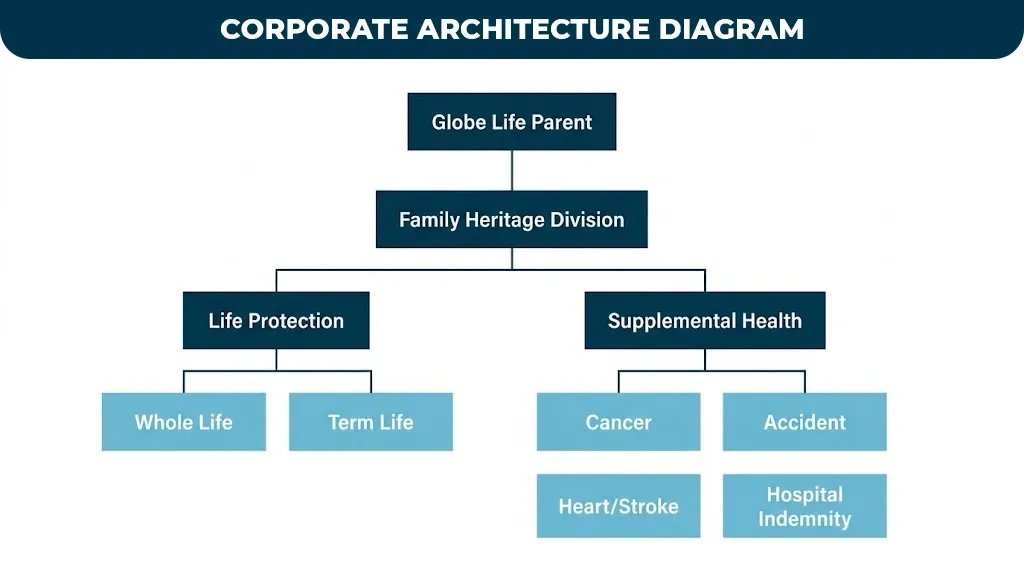
Not exactly, but they are closely linked. You will see the names combined in many searches, such as Globe Life Family Heritage, Family Heritage Globe Life, or even the misspelling Global Life Family Heritage. They all point to the same family of companies.
Here is how it breaks down:
- Globe Life is the parent company.
- Family Heritage operates as a division within that group, often called the Globe Life Family Heritage Division.
- Policies are issued by the insurance company named in your contract, so check the exact legal name on your paperwork.
How the Policies Pay
Most Family Heritage supplemental plans work as indemnity-style coverage. That means the policy pays a set cash benefit when a covered event happens. The money goes to you or your named beneficiary, not to the hospital or doctor.
This is different from regular health insurance. Your major medical plan pays providers. A supplemental plan puts cash in your hands so you can cover whatever you need, like rent, groceries, travel to treatment, or a high deductible.
Why this matters: Sudden medical bills and end-of-life costs can hit a household hard. Even families with solid health insurance often face deductibles, lost income, and out-of-pocket costs they did not plan for.

Core Coverage Options and Policy Types
Family Heritage coverage types fall into two buckets: life insurance and supplemental health protection. Available products can change by state, so use this section as a general guide.
Whole Life vs. Term Life Insurance
These are the two main life insurance structures, and the difference is simple.
Whole life insurance is permanent coverage. As long as you pay premiums, the policy stays in force for your entire life. It pays a guaranteed death benefit and builds cash value over time. Premiums typically stay level.
Term life insurance covers you for a set number of years, such as 10, 20, or 30. It usually costs less at first, which makes it popular with young families. If you outlive the term, the coverage ends unless you renew or convert it.
| Policy Type | Duration | Cash Value | Ideal Reader Profile |
| Whole Life | Lifetime | Yes, grows over time | Older adults and families who want permanent coverage and fixed premiums |
| Term Life | Fixed period (such as 10 to 30 years) | None | Young families covering a mortgage, kids, or temporary debts |
| Supplemental (cancer, accident, heart/stroke) | Varies by plan | Usually none, unless a return of premium feature applies | Anyone who wants extra cash for medical costs and lost income |
| Final Expense | Lifetime | Small cash value on some plans | Seniors who mainly want to cover funeral, burial, and small debts |
Supplemental Add-Ons and Riders
Supplemental coverage is where Family Heritage built its name. Common options include:
- Cancer coverage: pays cash benefits after a covered cancer diagnosis or treatment.
- Heart attack and stroke coverage: pays a benefit if you suffer a covered cardiac event.
- Accident coverage: pays when an injury leads to treatment, a hospital stay, or other covered events.
- Accidental death benefit: adds extra money to your beneficiary if death results from a covered accident.
- Hospital indemnity coverage: pays a daily or per-stay cash benefit.
Family Heritage Cancer Insurance and Return of Premium
Family Heritage cancer insurance is one of its most searched products, and many shoppers want to know about Family Heritage cancer insurance return of premium.
A return of premium (ROP) feature is designed to give some of your premiums back under certain conditions, usually after a set number of years with no claims, minus any benefits paid. The exact terms, waiting periods, and which plans include it depend on your state and policy version.
Before you buy, ask the agent for these details in writing:
- Does this specific policy include a return of premium option?
- How many years must pass before a refund applies?
- Are claims or withdrawals subtracted from the refund?
- What happens to the refund if I cancel early?
A return of premium features can cost more each month. Weigh that extra cost against the benefit you actually expect to use.
Pros and Cons of Family Heritage Life Insurance
Family Heritage insurance reviews are mixed, which is normal for a company that sells supplemental policies door to door and by appointment. Here is a balanced look.
The Pros
- Cash benefits paid directly to you. You decide how to use the money.
- Return of premium options on select products. Useful if you hate the idea of paying for coverage you might never use.
- Guaranteed renewable features. On many supplemental plans, the company cannot cancel your coverage just because your health changes, as long as you pay premiums on time.
- Backed by a large parent company. Globe Life has been around for decades.
- In-person service. Some people prefer sitting down with an agent who explains the options face to face.
The Cons
- You usually buy through an agent. That can feel like pressure if you prefer to compare plans online at your own pace.
- Heavy focus on supplemental coverage. It is not built primarily as a simple, high-value final expense plan.
- Premiums can add up. Stacking several supplemental policies may cost more than one well-chosen life policy.
- Benefits have limits and conditions. Waiting periods, exclusions, and benefit caps can surprise buyers who skip the fine print.
Is Family Heritage Life Insurance Legit?
Yes. Family Heritage is a legitimate, licensed insurance company and a long-standing subsidiary of Globe Life. It is not a scam.
That said, legit does not mean right for everyone. Complaints often come from people who did not fully understand what the policy covered, how premiums worked, or how to cancel. You can protect yourself in a few ways:
- Check the company’s financial strength rating with an independent rating agency.
- Look up complaint data with your state’s Department of Insurance.
- Read the full policy, including the outline of coverage, before you sign.
- Never sign under pressure. A good policy will still be there tomorrow.
How to Manage Your Policy: Claims, Login, and Customer Service
A lot of people searching for Family Heritage are not shopping. They already own a policy and need help. Here is how to handle the most common tasks.
Family Heritage Claims
To start a Family Heritage claim (also searched as Globe Life Family Heritage claims), follow these steps:
- Find your policy number on your policy documents or billing statement.
- Read your claim instructions. Your contract explains what proof you need, such as a diagnosis report, medical bills, or a death certificate.
- Contact the company using the claims instructions on your policy or on the official Globe Life Family Heritage website.
- Gather supporting documents before you file so you do not have to send them twice.
- Keep copies of everything and note the date you submitted it.
Tip: File as soon as you can. Some policies set deadlines for claim notices.
Family Heritage Customer Service and Phone Number
People often search for the Family Heritage life insurance phone number or Family Heritage customer service contact details. Phone numbers can change and may differ by department and state.
The safest place to find the correct number is:
- Your policy documents or billing statement
- Any member ID card you received
- The official Globe Life Family Heritage website
Be careful with phone numbers that appear in random ads or third-party listings. Scammers sometimes post fake customer service numbers. Always verify against your official paperwork.
Family Heritage Login and Online Access
If you want to view your policy online, search for the Globe Life Family Heritage login through the company’s official website. Type the address yourself or use a trusted bookmark, and avoid links from unsolicited emails or texts.
If you cannot register, call the customer service number printed on your policy.
What Is Family Heritage Preauth Dr?
You may also see searches like Family Heritage preauth dr or dr Family Heritage. These usually come from policyholders or medical offices trying to confirm coverage details or understand whether a treatment needs approval.
Here is the key point. Supplemental plans typically pay a cash benefit based on a covered event, rather than approving and paying each medical procedure like major medical insurance does. Your policy’s claim section will say what documentation is required and whether any advance notice applies. If you or your doctor’s office have questions, use the contact information on your policy.
Can I Get My Money Back From Family Heritage Insurance?
This is one of the most common questions, and the answer depends on your situation. There are a few possible paths.
1. The Free Look Period
Most states require a free look period after you buy a new policy. During that window, you can cancel and request a full refund of premiums paid. The length varies by state and product, often between 10 and 30 days, so check your policy delivery date and cover page.
2. Return of Premium Features
If your plan includes a return of premium option, you may be eligible for a refund after meeting certain conditions. Read the contract carefully, because early cancellation often reduces or voids the refund.
3. Cash Value on Whole Life Policies
Whole life policies can build cash value. If you cancel after several years, you may receive a cash surrender value. In the early years, that amount may be small or even zero after fees and costs.
4. Premium Refund After Cancellation
If you cancel mid-period, you may be owed a prorated refund of unused premium, depending on your policy and state rules.

How to Cancel Family Heritage Insurance
If you are searching for how to cancel Family Heritage insurance, take these steps:
- Review your policy for cancellation terms, notice requirements, and refund rules.
- Contact the company using the official customer service details on your documents.
- Request cancellation in writing and keep a copy. A written request creates a paper trail.
- Confirm the effective date of cancellation and any refund amount.
- Stop automatic payments with your bank only after you receive written confirmation.
- Check for replacement coverage first. Canceling before your new policy is active could leave you without protection.
Important: If your health has changed since you bought the policy, a new policy may cost more or exclude conditions. Think carefully before dropping coverage you cannot easily replace.
How Family Heritage Compares to Final Expense Insurance
Family Heritage is mostly about supplemental protection. Final expense insurance has a narrower job: paying for funeral, burial, and end-of-life costs so your family does not have to.
That difference matters more than most people realize.
Burial Insurance vs. Life Insurance
Traditional life insurance is built to replace income or protect long-term financial goals. Burial insurance is a smaller whole life policy designed for end-of-life expenses. Both pay a death benefit, but they serve different purposes.
According to the National Funeral Directors Association, a funeral with burial typically costs roughly $7,000 to $10,000 or more, depending on location and choices. That figure often does not include cemetery fees, flowers, or travel.
A cancer or accident rider will not help your family pay for a funeral. It pays on a covered health event, not on your passing from natural causes.
Key Differences at a Glance
- Application speed: Final expense policies often use a short application and can be approved quickly. Many supplemental and larger life policies take longer.
- Underwriting: Final expense plans commonly use simplified issue underwriting, meaning a few health questions and no medical exam. Some offer guaranteed acceptance.
- Payout use: A final expense benefit is usually paid to your beneficiary in a lump sum, and they can use it for funeral costs, final bills, or anything else.
- Focus: Supplemental plans protect against illness and injury. Final expense plans protect against the cost of dying.
When Does Each Option Make Sense?
Family Heritage may be a fit if you want extra cash for cancer or accident events and you are comfortable working with an agent.
Final expense may be a better fit if your top priority is making sure your family is not stuck with funeral bills, you are on a fixed income, or you want predictable premiums without a medical exam.

Key Factors to Consider Before Buying a Policy
Before you sign with any company, slow down and answer a few questions. Choosing life insurance gets much easier when you know what you need.
Start With Your Financial Goals
Ask yourself what the money is for. Is it replacing income for a spouse and children? Paying off a mortgage or medical debt? Covering a funeral and burial? Your answer will point you toward term, whole life, supplemental coverage, or final expense.
Understand Your Health and Underwriting Type
Health matters because it affects cost and approval.
- Fully underwritten plans may require a medical exam and offer higher coverage, often at lower rates for healthy applicants.
- Simplified issue plans skip the exam and use a short health questionnaire.
- Guaranteed issue plans accept nearly everyone but may have a waiting period before full benefits apply.
Lock In a Budget You Can Keep
If you live on a fixed income, fixed monthly premiums matter. Ask whether the rate can increase over time. A policy you cannot afford will lapse, and you could lose every dollar you paid.
A Simple Checklist to Evaluate Your Coverage Needs
- List your goals. Income replacement, debt payoff, funeral costs, or medical cash?
- Add up your numbers. Estimate funeral costs, debts, and the income your family would need.
- Check your current coverage. Include any group life policy through work, which often ends when you leave.
- Set a monthly budget you can hold for years.
- Compare at least three quotes from different carriers.
- Read the exclusions and waiting periods before you commit.
- Confirm the free look period so you have a way out.
Final Thoughts
Family Heritage life insurance can be a useful layer of protection, especially if you want cash to handle a cancer diagnosis or an accident. It is a real company with real products.
But if your main goal is a stress-free legacy, with funeral and burial costs covered quickly and no surprises left for your loved ones, a dedicated final expense plan is often the more direct and affordable choice.
Protecting your family from end-of-life bills should not be complicated. The right policy gives them one less thing to worry about at the hardest time.
Protect Your Family’s Legacy With Insure Final Expense
Don’t leave your loved ones with the burden of unexpected funeral costs or end-of-life bills. At Insure Final Expense, we help families find flexible, affordable, and hassle-free burial and final expense coverage that fits their budget.
- No medical exam required: Quick and easy approvals.
- Locked-in low rates: Monthly premiums that never increase.
- Guaranteed cash payouts: Fast financial support for your beneficiaries when it matters most.
Ready to safeguard your family’s financial future? Visit Insure Final Expense today to compare top-rated options and get your free, no-obligation quote in minutes.

Expert Final Expense & Life Insurance Agent
Steffanie is a licensed life insurance specialist at Insure Final Expense, focusing on final expense, burial, and senior life insurance solutions. With years of industry experience, she helps families secure affordable coverage designed to protect their loved ones from financial hardship. Her content is carefully researched, compliance-focused, and created to provide clear, trustworthy guidance so readers can make confident insurance decisions.